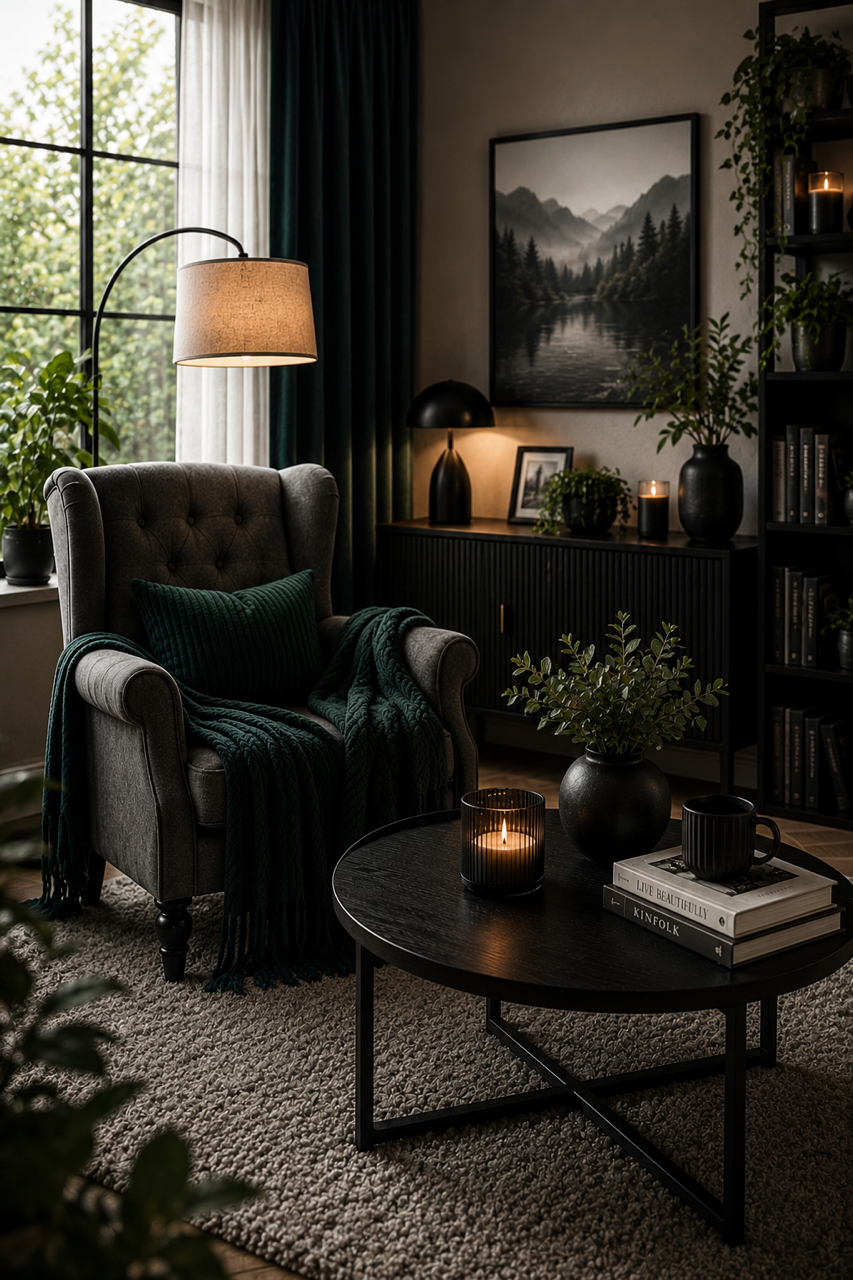
Reading Nook Ideas That Make a Small Corner Feel Calm and Beautiful
A reading nook does not need a library, a spare room or a large footprint. It needs one quiet corner, beautiful light and enough softness to make the rest of the home feel briefly distant.

Some links in this article may be affiliate links. If you purchase through them, we may earn a small commission at no additional cost to you. These commissions help support our editorial work.
A successful reading nook is less about adding more furniture and more about giving one small area a clear emotional purpose. It might be a window seat in a cottage bedroom, a wingback chair beside bookshelves, or a compact corner of the living room that catches the morning light.
What matters is the feeling of pause. A chair becomes more inviting when there is a table within reach, a lamp at the right height, a soft throw, a plant on the sill and a view or shelf that gives the eye somewhere to wander. These reading nook ideas show how small corners can become some of the most personal spaces in a home.
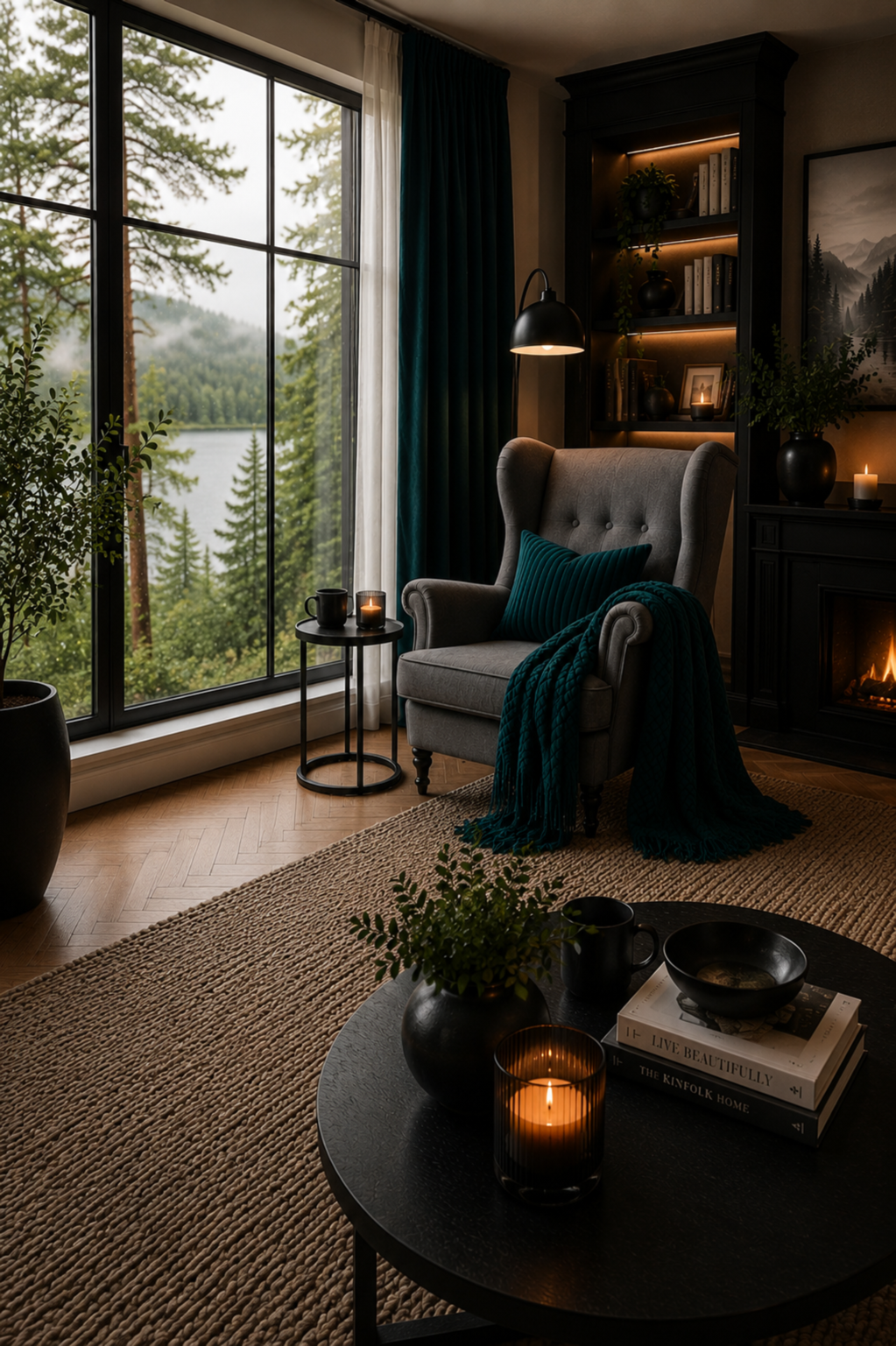
Idea 01
Start with the view, then build the corner around it.
A reading nook works best when it feels anchored to something more atmospheric than the chair itself. Here, the large window gives the corner a reason to exist: the grey wingback chair is turned towards the trees, while the black table, soft rug and warm shelf lighting make the space feel settled rather than staged. In a small home, this is often the difference between an empty corner and a private world.
Idea 02
Turn a window seat into a proper reading retreat.
A window seat can easily become decorative storage, but it becomes far more useful when it is styled like a destination. The layered cushions, relaxed throw and small tea table make this cottage nook feel ready for a slow afternoon, while the books and candlelight give it an unmistakable sense of ritual. The lesson is simple: comfort comes from invitation, not square footage.

Idea 03
Use deep colour to make the nook feel cocooned.
Dark green walls and warm leather create an enveloping mood without making the space feel heavy. The secret is contrast: the globe lamp, candlelight and framed print lift the darker palette, while the round rug softens the geometry of the corner. For small reading nooks, a richer colour can be more calming than a pale wall because it gives the eye somewhere to rest.

Idea 04
Let architecture do some of the decorating.
The arched window, fireplace and built-in shelves give this reading nook its sense of permanence. Instead of filling the space with extra objects, the styling allows the architecture to lead: one chair, one floor lamp, a few plants, and books placed where they feel natural. This is a useful principle for small rooms because architectural features can create richness without adding clutter.

Idea 05
Choose task lighting that feels warm, not clinical.
A reading lamp needs to be practical, but it should still belong to the atmosphere of the room. This black floor lamp gives focused light over the chair while the candle and small side table add a softer secondary glow. The result feels useful without becoming office-like. In a small corner, lighting is not decoration after the fact; it is what makes the corner usable.

Idea 06
Layer texture so the corner feels generous.
This nook proves that a small footprint can still feel abundant. The oversized throw, dark shelving, upholstered ottoman and patterned rug create depth through texture rather than through excess furniture. The chair remains the main event, but everything around it supports the same mood: quiet, tactile and protected from the rest of the room.

Idea 07
Keep a light corner interesting with shape and rhythm.
Pale, cozy corners can fall flat if every surface has the same tone. Here, the round rug, knitted pouffe, wingback chair and small table create rhythm, while teal accents and trailing plants prevent the palette from feeling too sweet. It is a softer approach to a reading nook, ideal for flats or smaller bedrooms where a dark palette may feel too dominant.

Idea 08
Use small tables to make the nook feel lived in.
A reading corner needs somewhere for the ordinary things: glasses, a cup, a candle, the book you are halfway through. Nesting tables are especially useful in small spaces because they can expand when needed and tuck away when the room has to breathe. In this nook, the layered tables make the corner feel practical, but the styling remains quiet and editorial.

Design principles
Design principles that make a small reading corner feel calm.
The best reading nooks are not built from one beautiful object. They come from comfort, light and a gentle sense of enclosure working together.
Comfort Before Styling
The chair, bench or window seat must be genuinely comfortable first. Cushions, throws and tables should support the act of reading rather than simply filling the frame.
Light in Layers
A reading nook needs focused task light, but it also needs atmosphere. Pair a floor or table lamp with candlelight, shelf lighting or soft window light so the space works at different times of day.
A Sense of Edge
The most inviting nooks feel gently enclosed. Curtains, bookcases, rugs, wall colour, plants or an architectural recess can all create the feeling of a room within a room.
The pieces behind the feeling
The Pieces Behind the Feeling
These are not the reason the room exists. They are the pieces that help create the feeling once the corner, light and story are already working.
Grey Wingback Accent Chair
A supportive high-back chair can make a small corner feel like a proper place to pause.
Cognac Leather Accent Chair
Warm leather gives a reading nook richness without needing extra decoration.
Teal Ribbed Fleece Throw
A deep teal throw adds warmth and colour while keeping the corner restful.
Teal Velvet Cushion Covers
Velvet cushions bring one rich accent into a neutral nook without making it feel busy.
Round Black Coffee Table
A small round table gives the nook room for a book, cup and candle without crowding the chair.
Round Nesting Coffee Tables
Nesting tables expand when needed and tuck away when the corner has to breathe.
Vintage Wood Wall Lamp
A wall lamp gives the corner useful reading light without taking up floor or table space.
Common mistakes
What makes a reading nook feel unfinished?
Choosing the chair before choosing the corner
A beautiful chair will not feel inviting if it faces the wrong direction or interrupts the room. Start with the quietest, most naturally sheltered spot, then choose furniture to suit it.
Relying on ceiling light
Overhead lighting rarely creates the atmosphere a reading nook needs. Use task lighting close to the chair and add a softer ambient glow nearby.
Forgetting the landing place
Without a side table, even a lovely chair can feel incomplete. A nook needs somewhere to put the small things that make reading feel effortless.
FAQ
Reading nook questions, answered.
How do you make a reading nook in a small space?
Start with one comfortable chair or window seat, add a small side table, warm task lighting and one or two soft textiles. The key is to make the corner feel intentional rather than simply placing a chair in unused space.
What should every reading nook include?
A good reading nook needs comfortable seating, warm focused light, a surface for books or a drink, and enough softness to make the space feel restful. Plants, curtains and rugs can help the nook feel more enclosed.
Where is the best place to put a reading nook?
The best place is usually beside a window, in an alcove, near bookshelves or in a quiet corner of a living room or bedroom. Choose a position with natural calm, then use lighting and textiles to make it usable throughout the day.
How can I make a reading corner look cozy but not cluttered?
Keep the furniture simple and repeat a restrained palette. Use texture for warmth, such as a throw, rug and cushion, but avoid filling every surface with decorative objects. A few useful pieces will feel more elegant than many small accessories.
Stay in this mood